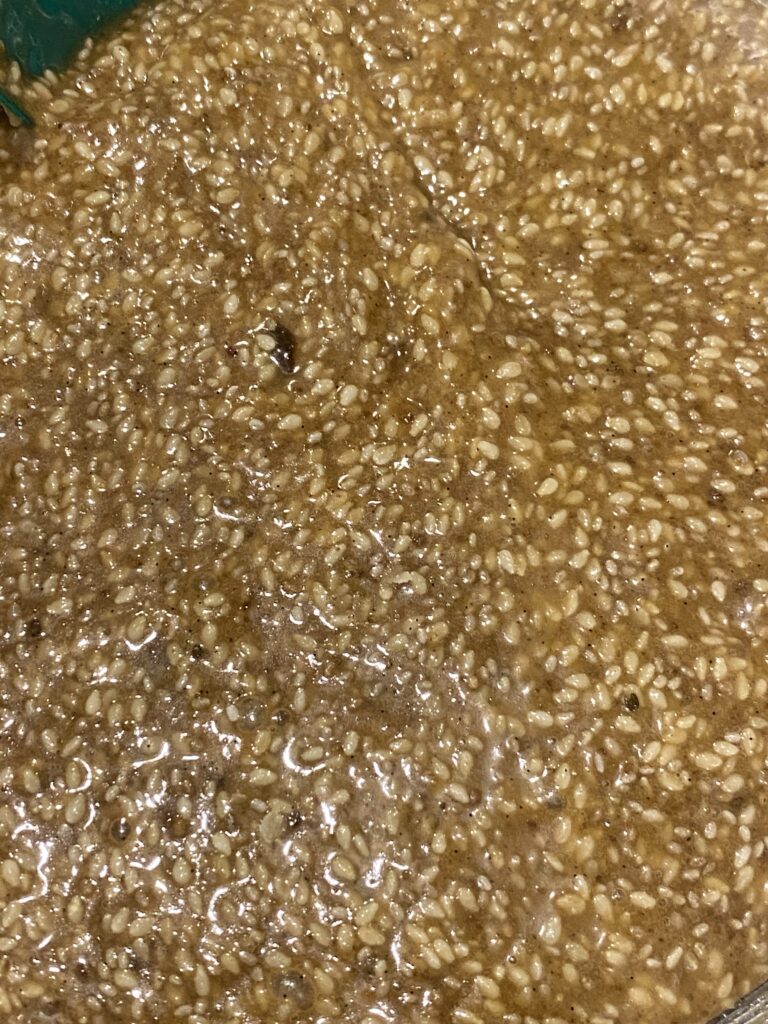
I truly have a thing for noodles. The slippery texture, the bite, the hearty nature, and the silken texture. My noodle love goes beyond just noodles. It is really a pasta fetish. Ravioli, lasagna, agnolotti, fideos, cavatelli—the list goes on; heck, even risotto falls into the mix. That is not to say that I am a traditionalist. Sure, the noodles can be flour or starch-based. Thankfully, pasta in its original form is just the tip, the beginning, the spark. What can we do with the traditional? How can what exists be the foundation for a variety of applications? What does it taste like and how can we exploit that taste? What is the texture, does it change, can it evolve? And, what is it not? I think the last question has been truly useful. Knowing what something is not allows for a greater understanding of what is and can be. It also allows for a shift in thinking and many times, a break or alteration from existing mindsets.
Today we made a dish that has been gathering dust in my notebooks. It is cacio e pepe made with noodles of papaya, dried papaya seeds (mimicking the peppercorns), and shaved pecorino Crotonese. The dish is simple, like the original. We have made a substitution or two which transforms a pasta dish I have indulged in many times into a lighter, almost salad-like dish of warmed papaya with cheese and its own peppercorn. While today we served the noodles on their own, I could also see the cacio e pepe component as a side dish or a component of another preparation. For now, I am enjoying a plateful of slippery noodles slicked with olive oil and butter, seasoned with the pecorino, and spirited by the dried papaya seeds.
About the Author